


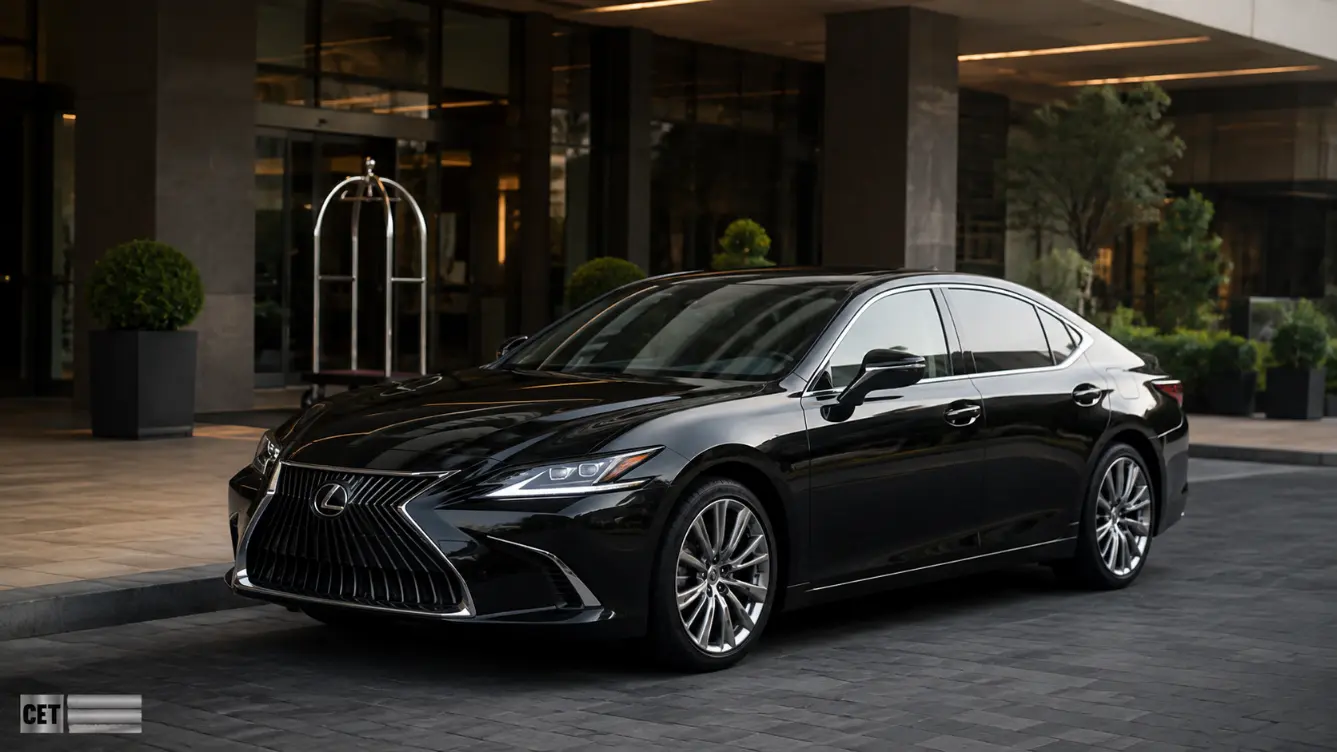
29 Sep Sedan vs SUV for Executive Transportation: Which Vehicle Fits Your Business Trip?
Quick Answer: For executive transportation, choose a sedan when one or two business travelers have modest luggage and want a streamlined vehicle for airport transfers, meetings, hotels, and client appointments. Choose an SUV when the itinerary includes additional passengers, more luggage, presentation materials, longer travel, or a need for greater cabin and cargo space. If several colleagues need to travel together, neither option may be ideal and an executive van or Sprinter may make more sense. The best vehicle should match the complete business itinerary rather than the executive’s title alone.
Key Takeaways
- A sedan is usually the most efficient choice for one executive or a small party with light luggage.
- An SUV becomes more practical when passengers, checked bags, business materials, or space requirements increase.
- Passenger capacity and practical luggage capacity should be evaluated separately.
- Airport transfers often require more cargo consideration than local meeting transportation.
- Vehicle selection should account for the complete itinerary, including meetings, hotels, airports, clients, and additional stops.
- A Sprinter or executive van may be more appropriate when several business travelers need to remain together.
- The largest or most expensive vehicle is not automatically the best executive transportation choice.
One of the most common questions when arranging professional business transportation is surprisingly simple: should the executive travel in a sedan or an SUV?
The answer depends on much more than appearance.
When comparing sedan vs SUV executive transportation, companies should consider passenger count, luggage, airport travel, business materials, meeting schedule, trip duration, client-facing requirements, and whether other colleagues will join the itinerary.
An individual executive with a laptop bag and one carry-on may be perfectly suited to a sedan. The same traveler arriving with multiple checked bags, presentation equipment, or two colleagues may be better matched with an SUV.
Corporate Executive Transportation provides corporate executive transportation for business travelers, clients, executives, and corporate groups throughout Southern California. The right vehicle is the one that supports the actual business itinerary without being too small, unnecessarily large, or poorly matched to the trip.
Table of Contents
- Sedan vs SUV Executive Transportation at a Glance
- When an Executive Sedan Makes Sense
- When an Executive SUV Makes Sense
- How Passenger Count Affects the Decision
- Why Luggage Can Change the Vehicle Choice
- Sedan vs SUV for Airport Transportation
- Which Is Better for Meetings and Corporate Travel?
- Choosing a Vehicle for Clients and VIP Guests
- Multi-Stop Business Travel
- Sedan vs SUV for Corporate Roadshows
- When Neither a Sedan nor SUV Is Enough
- Vehicle Selection for Executive Assistants
- Does an SUV Always Cost More?
- Which Vehicle Should You Choose?
- Executive Vehicle Selection Checklist
- Frequently Asked Questions
Sedan vs SUV Executive Transportation at a Glance
Both vehicle types can provide professional executive transportation. Their strengths are different.
| Consideration | Executive Sedan | Executive SUV |
|---|---|---|
| Best fit | Individual executives and small business parties | Executives needing more passenger or cargo room |
| Passenger space | Efficient for smaller parties | Greater flexibility for additional passengers |
| Luggage | Best when baggage is limited | Better suited to larger luggage requirements |
| Business materials | Appropriate for laptops, briefcases, and modest materials | More practical for presentation cases or additional equipment |
| Airport travel | Strong choice for one traveler with modest baggage | Useful when checked bags or additional passengers are involved |
| Corporate image | Professional and understated | Professional with a larger physical presence |
| Group transportation | Limited | More flexible, but a van may still be better for larger groups |
The table provides a useful starting point, but the full itinerary should determine the final choice.
When Does an Executive Sedan Make Sense?
A professional sedan is often the cleanest transportation solution for an individual executive or a small business party.
It avoids using more vehicle than the trip requires while still providing scheduled chauffeured transportation.
A Sedan Is Often a Strong Fit When:
- One executive is traveling
- The passenger has one carry-on or modest luggage
- The itinerary involves local business meetings
- The traveler needs an airport-to-hotel transfer
- A visiting client is traveling alone
- The executive has several professional appointments but limited baggage
- The trip requires a discreet, straightforward business vehicle
A sedan can work especially well for travel involving hotels, offices, restaurants, corporate campuses, airports, and client locations.
CET’s premium sedan chauffeur service information provides additional guidance for individual executive and visiting-client transportation.
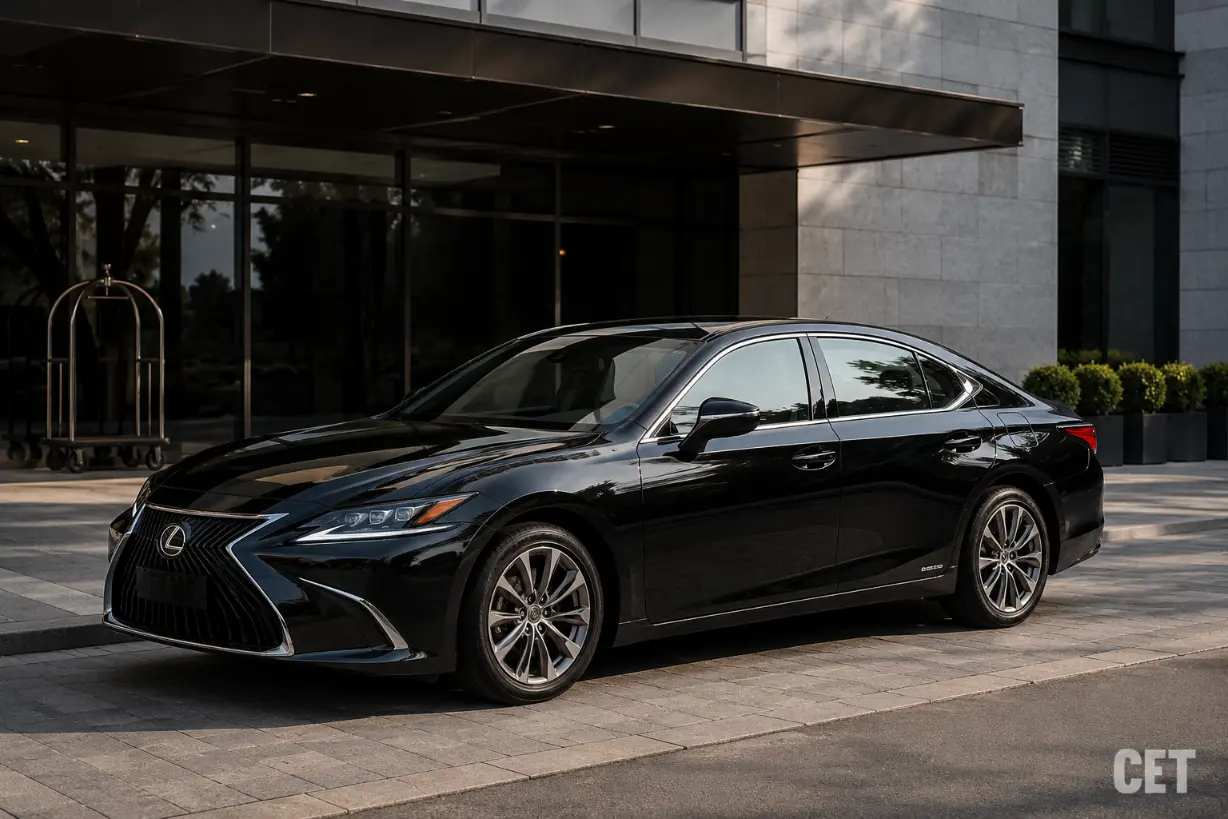
Why Executives Often Prefer Sedans
A sedan provides enough space for many individual business itineraries without being unnecessarily large.
For example, an executive arriving with:
- One laptop bag
- One carry-on
- One checked suitcase
- A standard meeting schedule
may not need an SUV unless additional passengers or cargo requirements are expected.
A sedan can also create a simple professional arrival for:
- Board meetings
- Client lunches
- Investor meetings
- Hotel pickups
- Airport transfers
- Business dinners
When a Sedan Starts Becoming Too Small
The sedan becomes less practical as either the number of passengers or the volume of luggage increases.
Potential warning signs include:
- Several checked suitcases
- Three or more business travelers
- Large presentation cases
- Trade-show materials
- Golf bags
- Oversized equipment
- A need to transport additional guests later in the itinerary
In those situations, an SUV should be considered before the reservation is finalized.
When Does an Executive SUV Make Sense?
An executive SUV is generally selected when the business trip needs additional room without moving into a full-size van or group vehicle.
Its strongest advantage is flexibility.
An SUV Can Be a Better Fit When:
- Several executives are traveling together
- The passenger has multiple suitcases
- An airport trip involves checked baggage
- The executive is carrying presentation materials
- A client or colleague will join the trip
- Additional cabin space is preferred
- The itinerary includes a longer regional transfer
- The company wants one vehicle for a small business party
CET offers a Cadillac Escalade ESV option that can be considered for executive transportation when passenger and luggage needs exceed what is practical in a sedan.
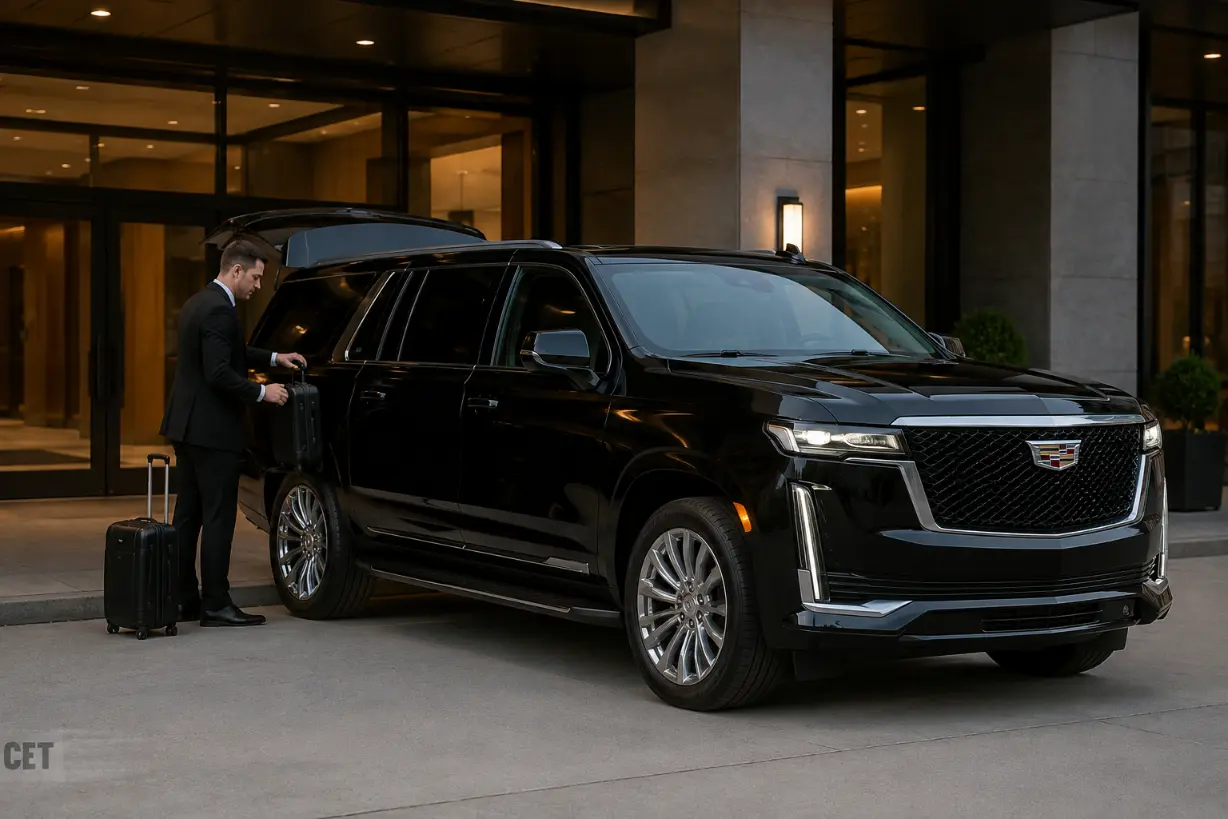
More Seats Do Not Automatically Mean More Practical Capacity
This distinction is important.
A vehicle may technically have enough passenger seating while still being poorly suited to the luggage accompanying those passengers.
For example, several airport travelers may each have:
- One checked suitcase
- One carry-on
- One laptop bag
The combined cargo requirement can become the deciding factor even if the passenger count itself appears manageable.
That is why companies should provide both passenger count and luggage information before selecting a vehicle.
How Passenger Count Affects Sedan vs SUV Selection
Passenger count is one of the first pieces of information the transportation provider needs.
But the number should be interpreted together with the itinerary.
One Executive
A sedan is often sufficient when one executive is traveling with modest luggage.
An SUV may still be appropriate if:
- The traveler has significant luggage
- Large business equipment is involved
- Other passengers will join later
- The executive simply requires additional room
Two Executives
A sedan may remain practical depending on luggage.
If both passengers arrive from an airport with checked baggage, an SUV may provide greater flexibility.
Three or More Business Travelers
At this point, luggage and comfort deserve closer review.
An SUV can become the more practical option, particularly for airport travel or longer regional transportation.
Larger Corporate Teams
If the party grows beyond what is comfortable or practical in an SUV, an executive van should be considered instead of simply adding multiple cars.
Why Luggage Can Change the Vehicle Choice
A passenger count alone does not tell the entire story.
Airport transportation is the most obvious example.
Compare these two trips:
Trip A
- Two executives
- Two laptop bags
- No checked luggage
- Hotel to business meeting
A sedan may be an excellent fit.
Trip B
- Two executives
- Two checked suitcases
- Two carry-ons
- Two laptop bags
- Airport to hotel
The passenger count is identical, but the transportation requirement is different.
An SUV may now be the safer practical choice because baggage volume has increased significantly.
Consider Special Business Items
Executives may also travel with:
- Presentation equipment
- Product samples
- Trade-show materials
- Display cases
- Golf bags
- Marketing materials
- Specialty luggage
These items should be disclosed before booking.
Air travelers can also review the Transportation Security Administration’s official TSA travel tips when preparing carry-on and checked baggage for the air-travel portion of a business trip.
Pro Tip: When booking executive airport transportation, send both the passenger count and an approximate luggage count. “Two passengers” does not provide enough information to determine whether a sedan or SUV will be the more practical vehicle.
Sedan vs SUV for Executive Airport Transportation
Airport transportation is one of the most common situations where companies must choose between a sedan and SUV.
The answer usually depends on four factors:
- Passenger count
- Luggage
- Flight itinerary
- Destination after the airport
Choose a Sedan When:
- One executive is arriving
- Luggage is modest
- The traveler goes directly to a hotel or meeting
- No additional passengers will join the trip
Choose an SUV When:
- Several travelers are arriving
- Multiple checked bags are involved
- The passenger has business equipment
- The executive is traveling with colleagues or clients
- The itinerary requires more cargo flexibility
CET’s airport transportation service can connect an airport arrival with hotels, offices, conferences, meetings, client locations, and other business destinations.
Ontario International Airport Arrivals
Travelers using ONT can review Ontario International Airport’s official ground transportation information and landside map when preparing an arrival or departure.
Providing the airline, flight number, passenger count, and luggage estimate helps connect the flight with the appropriate ground transportation plan.
Sedan vs SUV for Meetings and Corporate Travel
For local business transportation without airport luggage, the sedan-vs-SUV decision becomes more straightforward.
Consider the actual purpose of the trip.
Individual Executive Meeting
A sedan is often the most efficient option.
Executive Plus Two Colleagues
An SUV may provide more room, especially when everyone is traveling together for several appointments.
Executive Carrying Presentation Materials
The extra cargo capacity of an SUV may make it the stronger choice.
Client Dinner
Either option can work. Choose according to the final passenger count and whether additional guests will join after the meeting.
Conference Attendance
A sedan may work for one attendee or speaker, while an SUV may be more practical for several colleagues or travelers with conference materials.
For Ontario-area conferences, CET’s guide to Ontario Convention Center transportation covers airport, hotel, group, speaker, and executive transportation planning around meetings and events.
Choosing a Sedan or SUV for Clients and VIP Guests
The transportation decision can carry additional importance when the passenger is a guest rather than an employee.
A company may arrange transportation for:
- A major client
- An investor
- A board member
- A business partner
- A consultant
- A keynote speaker
- A senior candidate
- A visiting executive
A sedan can provide a professional and appropriately understated experience for one guest with light luggage.
An SUV may be better when the guest:
- Arrives with several bags
- Travels with another person
- Has presentation materials
- Will be joined by company representatives
- Needs more room during a longer regional transfer
For smaller VIP and executive parties, CET’s black car service in Ontario CA is another relevant transportation option.
CET’s guide to private car hire for executives also explains when prearranged professional transportation can make sense for senior business travelers.
Sedan vs SUV for Multi-Stop Business Travel
A multi-stop itinerary introduces another factor: how the vehicle will be used throughout the business day.
An executive might travel through:
- Hotel
- Corporate office
- Client location
- Business lunch
- Second client meeting
- Conference venue
- Dinner
- Hotel
For one executive with a briefcase, a sedan may remain completely appropriate throughout that schedule.
If two or three colleagues join the traveler during the day, or if luggage and business materials remain with the party, an SUV may provide greater flexibility.
Companies with several closely connected appointments can also review CET’s hourly executive car service guide when deciding how to structure transportation around a multi-stop business day.
Do Not Select the Vehicle Based Only on the First Stop
A sedan may appear appropriate for the hotel pickup at 8:00 a.m.
But if two clients will join the executive after lunch and travel to the next meeting, the vehicle should be selected with that later requirement in mind.
Whenever possible, plan for the highest practical passenger and luggage requirement expected during the reservation.
Sedan vs SUV for Corporate Roadshows
Corporate roadshows can involve several meetings and multiple Southern California cities during the same day.
The best vehicle should support the entire route.
A Sedan May Work Well When:
- One executive is traveling
- Luggage is limited
- No additional passengers are expected
- The traveler needs an efficient professional vehicle throughout the itinerary
An SUV May Be Better When:
- Several colleagues are traveling
- The group has airport luggage
- Presentation materials remain in the vehicle
- Clients may join transportation between meetings
- The itinerary includes longer regional travel
CET’s guide to corporate roadshow transportation in Southern California explains how vehicle selection fits with multi-city routing, meeting times, airports, and changing business schedules.
Consider Travel Conditions Between Cities
Southern California roadshows can involve Ontario, Riverside, Orange County, Los Angeles, and other regional business markets.
Corporate coordinators can use the official Caltrans QuickMap to review traffic, highway conditions, CHP incidents, and lane closures when assessing regional travel conditions.
Vehicle type does not eliminate traffic, so the itinerary should still include realistic travel allowances.
When Neither a Sedan nor SUV Is the Right Choice
Sometimes the correct answer to sedan vs SUV is: neither.
If a corporate group has enough travelers, luggage, or equipment that an SUV becomes crowded, moving into an executive van can simplify the itinerary.
Examples include:
- Corporate leadership teams
- Conference groups
- Client delegations
- Sales teams
- Roadshow participants
- Private aviation groups
- Employees traveling from the same hotel
CET’s fleet includes a 10-passenger Mercedes-Benz Sprinter Executive Limousine for suitable corporate group transportation requirements.
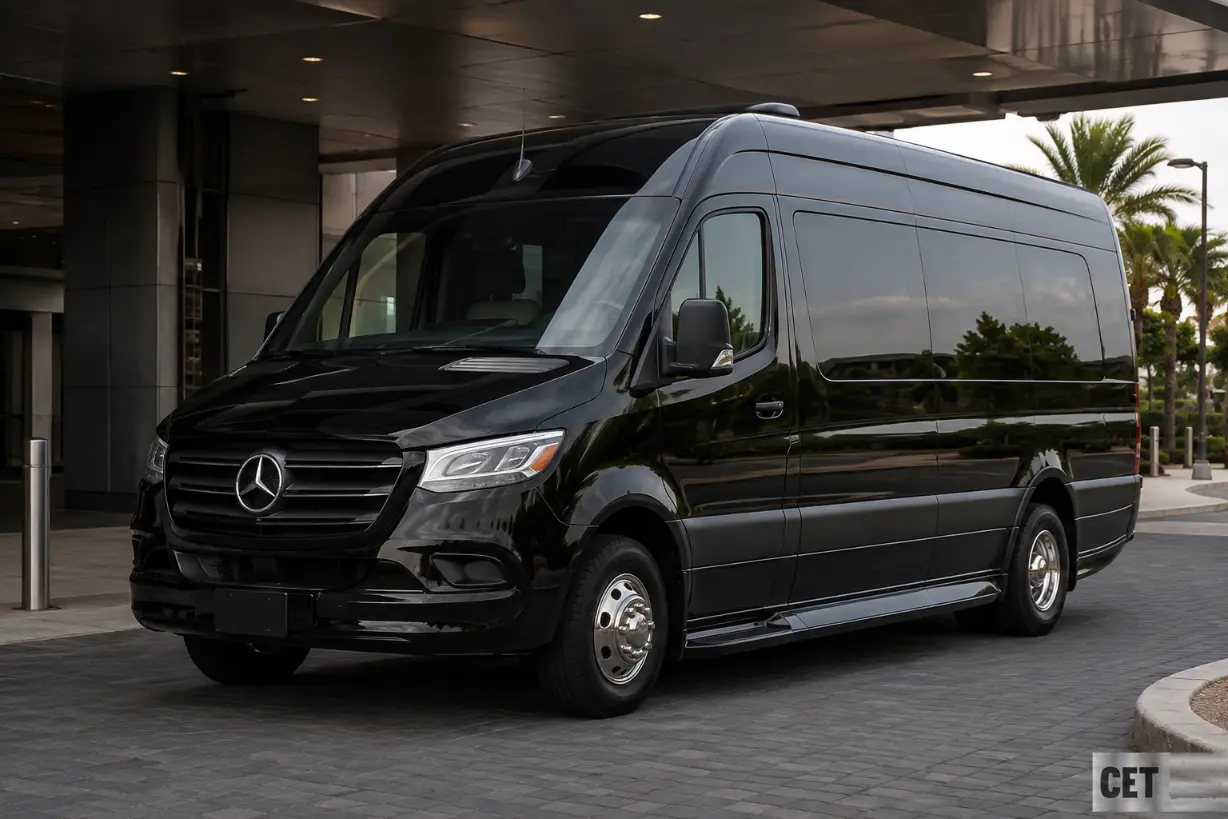
Do Not Automatically Split a Group Into Several SUVs
Several vehicles may make sense when executives have different schedules.
However, if everyone:
- Starts at the same location
- Attends the same meeting
- Travels to the same dinner
- Returns to the same hotel
then one appropriately sized executive vehicle may be easier to coordinate.
The group itinerary should determine whether one van or several vehicles are more practical.
Sedan vs SUV Planning for Executive Assistants
Executive assistants often make the vehicle decision without personally traveling in it.
That makes accurate information essential.
Ask These Questions Before Selecting the Vehicle:
- Who is actually traveling?
- How many passengers are confirmed?
- Will anyone join during the day?
- How much luggage will the travelers have?
- Are oversized business materials involved?
- Is the trip beginning at an airport?
- How many stops are planned?
- Will clients ride with the executive?
- Is the trip local or multi-city?
- Will the same vehicle requirement apply for the return trip?
For a complete planning workflow, CET’s Executive Assistant’s Guide to Arranging Corporate Transportation covers passenger information, airports, meetings, itineraries, vehicle requirements, and schedule changes.
Executive Assistant Rule: Do not ask only, “Sedan or SUV?” First ask who is traveling, what they are carrying, where they are going, and whether anyone else will join the itinerary. Vehicle selection becomes much easier once those four questions are answered.
Does an SUV Always Cost More Than an Executive Sedan?
Vehicle class can affect transportation pricing, but there is no universal price difference that applies to every reservation.
The cost of an executive transportation trip may also depend on:
- Pickup and destination
- Trip duration
- Number of stops
- Airport requirements
- Waiting time
- Hourly minimums where applicable
- Parking or tolls where applicable
- Travel date
- Vehicle availability
- Changes to the itinerary
The correct approach is to request pricing for the actual trip rather than assuming a fixed difference between a sedan and SUV.
Do Not Choose a Sedan Solely to Reduce Cost
If the sedan cannot practically accommodate the passengers and luggage, selecting it only because it appears less expensive can create a poor transportation plan.
Likewise, reserving an SUV when a sedan comfortably satisfies the itinerary may add vehicle capacity the traveler does not actually need.
The goal is appropriate vehicle sizing.
Which Vehicle Fits Your Business Trip?
Use the following examples as a practical decision guide.
| Business Trip | Likely Vehicle to Consider | Reason |
|---|---|---|
| One executive, local meetings, briefcase | Sedan | Efficient vehicle size for a straightforward individual itinerary. |
| One executive, airport transfer, several large bags | SUV | Additional cargo space may be useful. |
| Two executives with carry-ons | Sedan or SUV | Final choice depends on luggage and preferred space. |
| Three executives with checked luggage | SUV | Passenger and luggage requirements favor more space. |
| VIP client traveling alone | Sedan | Professional and appropriately sized when luggage is light. |
| Client plus company representatives | SUV | Greater flexibility for additional passengers. |
| Corporate team with one itinerary | Sprinter or executive van | Can keep the group together instead of using several smaller vehicles. |
Five Business Scenarios: Sedan or SUV?
Scenario 1: Solo Executive Arriving at ONT
The executive has one carry-on, one laptop bag, and travels directly to a hotel before an afternoon meeting.
Likely choice: Sedan.
The itinerary does not appear to require the additional passenger or cargo flexibility of an SUV.
Scenario 2: Two Executives With Checked Luggage
Both travelers arrive at an airport, each with multiple bags, and continue directly to a meeting.
Likely choice: SUV.
The passenger count alone may fit a sedan, but the luggage requirement changes the decision.
Scenario 3: CEO Traveling Between Several Client Meetings
One traveler has a briefcase and follows a full-day roadshow.
Likely choice: Sedan.
A sedan can remain practical even for a long itinerary when the passenger and luggage requirements remain small.
Scenario 4: Visiting Client Plus Two Company Hosts
The client arrives with checked luggage, and two employees accompany the visitor to meetings and dinner.
Likely choice: SUV.
The additional passengers and luggage make the larger vehicle more practical.
Scenario 5: Eight Employees Attending a Conference
The team stays at the same hotel and follows the same conference and dinner schedule.
Likely choice: Neither sedan nor SUV.
An executive van or Sprinter should be considered instead of dividing the group across several smaller vehicles.
What About Private Aviation Arrivals?
A private aviation passenger can face the same sedan-vs-SUV decision.
The fact that the executive arrives through an FBO does not automatically determine the ground vehicle.
A sedan may still be appropriate for one executive with light luggage.
An SUV may be better when:
- Several travelers arrive aboard the aircraft
- More baggage is involved
- Business equipment is being carried
- The executive continues directly into a multi-stop itinerary
CET’s guide to private aviation and FBO transportation in Southern California explains how ground vehicle planning connects with private aviation arrivals.
Do Not Choose Based on Status Alone
One of the easiest mistakes in executive transportation is assuming that the most senior traveler automatically requires the largest vehicle.
That is not a useful planning rule.
A CEO traveling alone with one carry-on may be better served by a sedan than a large SUV.
A mid-level corporate team carrying equipment and airport luggage may have a legitimate need for an SUV or executive van.
The correct question is not:
“How important is the passenger?”
The better questions are:
- How many people are traveling?
- How much luggage do they have?
- What does the business itinerary involve?
- Will additional passengers join?
- Is an airport involved?
- Are business materials being transported?
Those answers provide a much stronger basis for vehicle selection.
Sedan vs SUV Executive Transportation Checklist
Use this checklist before choosing a vehicle for an executive business trip.
- Travel date confirmed
- Passenger name confirmed
- Passenger contact information available
- Total passenger count finalized
- Checked luggage estimated
- Carry-on luggage estimated
- Business equipment or presentation materials identified
- Airport information included when applicable
- Flight information provided
- Pickup location confirmed
- All known destinations listed
- Additional passengers joining later identified
- Client or VIP transportation requirements reviewed
- Trip duration considered
- Multi-stop itinerary reviewed
- Roadshow requirements considered
- Return-trip passenger count confirmed
- Sedan capacity reviewed against actual requirements
- SUV capacity reviewed against actual requirements
- Sprinter or executive van considered if the group is too large
- Final vehicle recommendation confirmed before booking
Choose the Vehicle That Fits the Business Itinerary
The sedan-vs-SUV decision should ultimately be practical.
Choose a sedan when the executive transportation requirement is streamlined:
- One or two passengers
- Modest luggage
- Standard meetings
- Airport transfers with manageable baggage
- Individual client transportation
Choose an SUV when the itinerary needs more flexibility:
- Additional passengers
- More checked luggage
- Presentation materials
- Longer regional travel
- Clients traveling with company representatives
- More cargo space
And when the group becomes too large for either option, consider an executive van instead of forcing the party into several vehicles unnecessarily.
For companies still organizing the complete trip, CET’s guide to booking corporate transportation for executives explains what information to prepare before making the reservation.
Related Corporate Travel Guides
- Private Car Hire for Executives: Business Travel Guide
- Corporate Roadshow Transportation in Southern California
- Hourly Executive Car Service for Multi-Stop Business Travel
- Corporate Transportation for Ontario Convention Center Meetings and Conferences
Need Help Choosing an Executive Vehicle?
Send CET the passenger count, luggage, airport details, pickup location, meetings, destinations, and business itinerary. The trip requirements can then be matched with an appropriate sedan, SUV, executive van, or other transportation option.
Frequently Asked Questions About Sedan vs SUV Executive Transportation
Is a sedan or SUV better for executive transportation?
Neither vehicle is automatically better for every executive trip. A sedan is often appropriate for one or two travelers with modest luggage, while an SUV can be more practical when additional passengers, checked baggage, presentation materials, or extra space are required.
How many executives can travel in a sedan?
The practical passenger count depends on the specific vehicle and luggage requirements. Sedans are generally best suited to individual executives or small business parties. Always confirm the actual passenger and luggage requirements with the transportation provider before booking.
Should I book an SUV for an executive airport transfer?
An SUV can be a good choice when the executive has several checked bags, additional passengers, business equipment, or other space requirements. A sedan may remain the better option for a solo traveler with modest luggage.
Is an SUV better for multiple business meetings?
Not necessarily. One executive with minimal luggage can comfortably use a sedan for a multi-stop business day. An SUV becomes more useful when colleagues, clients, luggage, or presentation materials increase the space requirement.
What vehicle is best for a visiting VIP client?
A sedan can provide professional transportation for an individual VIP guest with light luggage. An SUV may be more appropriate when the client has additional luggage, travels with another person, or will be joined by company representatives during the itinerary.
When should I book a Sprinter instead of an SUV?
Consider a Sprinter or executive van when the corporate group becomes too large for an SUV or when keeping several colleagues together is more practical than using multiple smaller vehicles. Passenger count, luggage, and whether everyone follows the same itinerary should be reviewed together.
Does luggage matter more than passenger count when choosing a sedan or SUV?
Both matter. A small passenger group can still require an SUV if several large suitcases, carry-ons, presentation cases, golf bags, or other bulky items are involved. Passenger count should always be considered together with practical luggage requirements.
What information should I provide before choosing an executive sedan or SUV?
Provide the travel date, passenger count, luggage estimate, airport and flight information when applicable, pickup location, destinations, business stops, trip duration, client or VIP requirements, and whether additional passengers will join later. These details help determine which vehicle best fits the complete itinerary.

Sorry, the comment form is closed at this time.