


05 Aug Sedan, SUV, Sprinter, or Coach: What Vehicle Should You Book for Ontario Airport
Sedan, SUV, Sprinter, or Coach: What Vehicle Should You Book for Ontario Airport Transportation?
The right airport vehicle is not determined by passenger count alone. Two travelers with carry-on bags may fit comfortably in a sedan, while the same two travelers with several checked suitcases, golf bags, presentation cases, or mobility equipment may need an SUV or van.
Group size matters, but so do luggage volume, trip distance, comfort expectations, accessibility needs, and what happens after the airport pickup. A direct ride to a nearby hotel has different requirements from an Ontario Airport pickup followed by several offices, a conference venue, and an evening return.
This guide compares the main vehicle categories used for Ontario Airport transportation and explains what information to provide before reserving a sedan, SUV, Sprinter, or larger group vehicle.

Why Passenger Count Is Only the Starting Point
A booking request that says “four passengers” leaves several important questions unanswered. Are all four adults? Does each person have a checked suitcase and carry-on? Is anyone traveling with a child seat, wheelchair, walker, golf clubs, trade-show materials, or oversized equipment?
Before choosing a vehicle, account for:
- Total number of adults and children
- Number of carry-on bags
- Number and size of checked bags
- Oversized or unusually shaped items
- Mobility devices and accessibility requirements
- Child-seat requirements
- Trip distance
- Whether passengers need workspace or added privacy
- Whether more travelers will join after the airport pickup
- Whether the vehicle must remain available for later stops
The transportation provider should recommend a vehicle using the complete trip description. Choosing only by the maximum advertised seating can create an uncomfortable or impractical arrangement once the luggage is added.
When an Executive Sedan Makes Sense
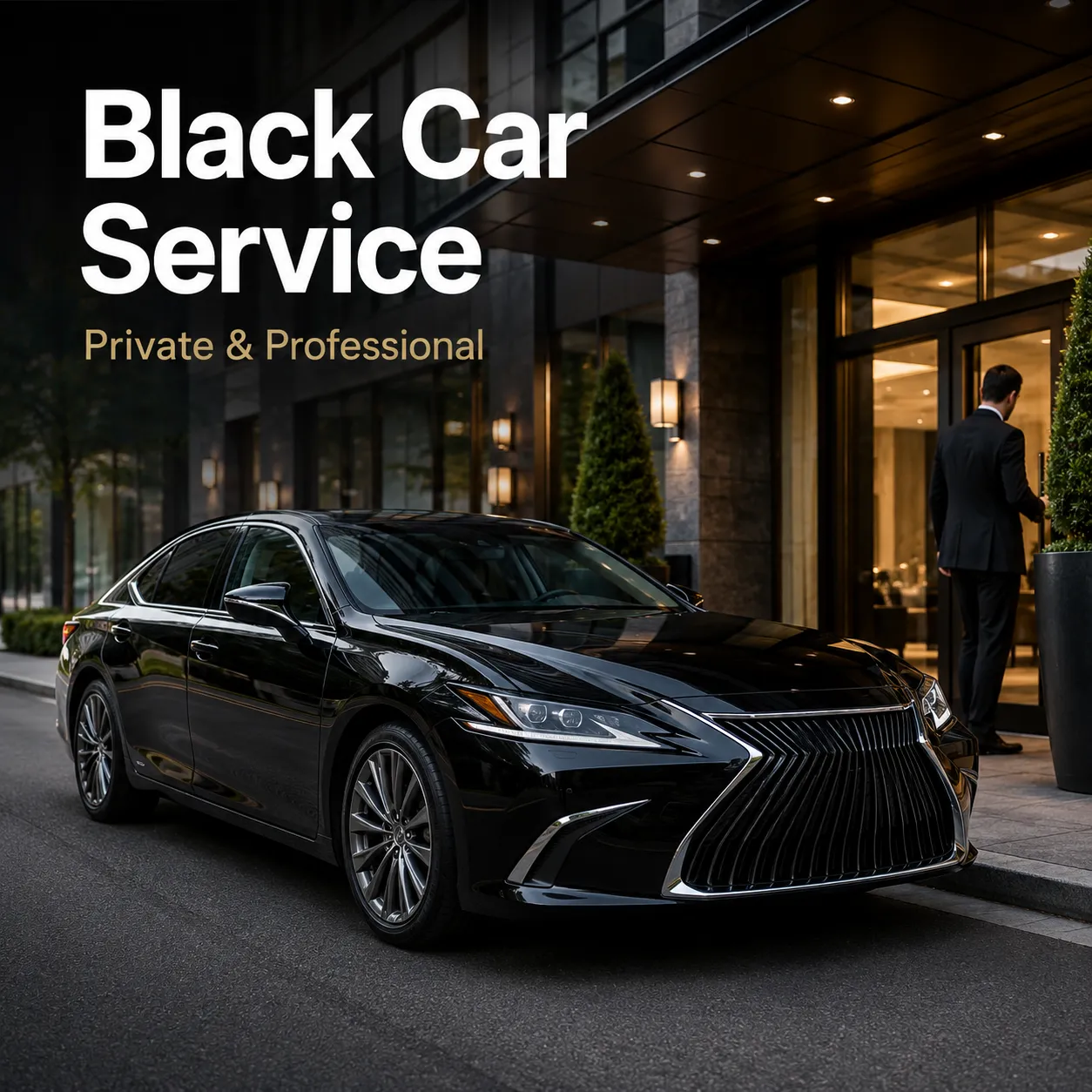
An executive sedan is often suitable for an individual traveler, a couple, or a small business party carrying a reasonable amount of luggage. It works well for direct, scheduled airport transfers where the pickup and destination are already known.
Typical sedan trips include:
- One executive traveling from ONT to an office
- A couple traveling from home to Ontario Airport
- A visiting client going from the airport to a hotel
- A direct transfer between Ontario and another Southern California city
- A passenger carrying only a laptop bag and one suitcase
A sedan may be the wrong choice when passengers have several large bags, bulky equipment, or need to add another traveler after leaving the airport. It may also be too small when everyone expects to work comfortably during a longer ride.
Questions to ask before booking a sedan
- How many passengers and full-size suitcases can the specific vehicle accommodate?
- Will carry-on bags remain in the trunk or passenger area?
- Is the passenger bringing golf clubs, sample cases, or other long items?
- Will another person join at the hotel or office?
- Is the trip direct or part of an hourly itinerary?
CET’s premium sedan chauffeur-service guide provides additional information about private sedan travel.
When an SUV Is the Better Choice
An SUV can provide additional luggage room and passenger space without moving to a full group vehicle. It is often useful for families, small corporate teams, travelers with several checked bags, or passengers who prefer more interior room.
An SUV may be appropriate for:
- A small family with checked luggage
- Two or three executives traveling with equipment or presentation cases
- Travelers carrying golf bags or other long items
- A longer airport transfer where additional room is useful
- A hotel pickup involving several passengers and their bags
- A client transfer where comfort and luggage capacity are both priorities
Not every SUV has the same layout. A third row can increase seating but reduce cargo room when it is in use. The reservation should identify whether the priority is more seats, more luggage space, or a balance of both.
Do not assume that an SUV automatically solves every capacity issue. A larger group with individual checked bags may still need a Sprinter or more than one vehicle.
When to Book a Sprinter Van
A Sprinter van is often the practical choice when a group wants to travel together and a sedan or SUV cannot handle the combined passenger and luggage load. It can simplify coordination for company teams, conference attendees, families, wedding parties, and other groups arriving at Ontario Airport.
Sprinter transportation may be appropriate when:
- Several passengers arrive on the same flight
- The group carries individual checked luggage
- Employees need one shared transfer to a hotel or convention
- The itinerary includes several offices or venues
- The passengers want to remain together rather than split into cars
- Presentation materials or event supplies are traveling with the group
Ask whether the proposed Sprinter configuration is designed mainly for passenger seating, executive travel, luggage capacity, or a combination. Interior layouts differ, and a van with more seats may have less room for large bags.

For business groups, see CET’s guide to Sprinter van transportation in Ontario, CA.
When a Coach or Larger Group Vehicle Is Needed
A coach, minibus, or another large-capacity vehicle may be appropriate when the passenger manifest exceeds smaller-vehicle capacity or when a company needs to move a substantial group on one schedule.
Common uses include:
- Conference and convention arrivals
- Large corporate teams
- Hotel-to-venue shuttle schedules
- Wedding or event groups
- Multiple families traveling together
- Airport transfers involving extensive baggage
Large-group planning should begin early. The coordinator may need passenger manifests, several flight records, luggage estimates, hotel contacts, venue access instructions, and a plan for travelers whose flights are delayed.
When passengers arrive on several flights, one large vehicle is not always the most efficient arrangement. The group may need staggered pickups, a smaller advance vehicle, or separate transfers based on arrival windows.
Vehicle Comparison at a Glance
| Vehicle Type | Often Suited To | Capacity Question to Ask |
|---|---|---|
| Executive sedan | Individuals, couples, small business parties, direct transfers | Will all passengers and full-size bags fit in the assigned model? |
| SUV | Small groups, families, travelers with additional luggage | How does third-row use affect luggage space? |
| Sprinter van | Corporate teams, conference groups, larger families | What is the seating and luggage configuration of the specific van? |
| Coach or large group vehicle | Conventions, large teams, shuttle schedules, major events | Can it accommodate the full manifest and every passenger’s luggage? |
These are planning categories, not universal capacity promises. Confirm the model and interior configuration that will actually be assigned to the reservation.
How Luggage Changes the Vehicle Decision
Luggage is one of the most common reasons an airport vehicle must be upgraded. A party that fits by seat count may not fit once the bags are loaded.
Provide separate counts for:
- Personal items
- Carry-on bags
- Full-size checked suitcases
- Oversized luggage
- Golf clubs or sports equipment
- Strollers and child equipment
- Wheelchairs or walkers
- Trade-show displays and business materials
The Transportation Security Administration maintains an official “What Can I Bring?” reference for items permitted in carry-on and checked baggage. Airline size, weight, and quantity limits are separate, so travelers should also verify their specific airline’s baggage rules before the trip.
A transportation company does not need the weight of every suitcase, but it does need an honest estimate of the number, size, and shape of the items entering the vehicle.
Vehicle Choice for Business Travelers
An executive traveler may need more than a ride from the airport. The vehicle may function as transportation between calls, meetings, offices, meals, and the hotel.
Consider whether the passenger needs:
- A quiet environment between meetings
- Room for a laptop bag and presentation cases
- Several client or office stops
- The vehicle to wait during meetings
- A colleague to join later
- Transportation to another airport at the end of the day
For a direct airport-to-office ride, a sedan or SUV may be sufficient. For a multi-stop business day, choose a vehicle that remains comfortable after luggage and additional passengers are added.
CET’s Ontario Airport-to-office transportation guide explains how to coordinate flights, meeting times, office access, and return trips.
Vehicle Choice for Families
Families should describe both passengers and child-related equipment. A stroller, child seat, diaper bag, and several suitcases can use more space than expected.
Before reserving, identify:
- Number and ages of children
- Number of child seats required
- Strollers or portable cribs
- Checked and carry-on luggage
- Whether several family members are being dropped off at different locations
- Any mobility or assistance requirements
Child-passenger requirements should be discussed with the provider before booking. The company should explain what equipment is available, what the family must supply, and how seating affects total passenger capacity.
Vehicle Choice for Travelers With Disabilities
Accessibility needs should be described specifically. “Wheelchair passenger” does not show whether the chair folds, whether the passenger transfers independently, or whether an accessible vehicle is required.
Provide information about:
- Manual or powered mobility device
- Whether it folds
- Approximate dimensions when relevant
- Whether the passenger can transfer to a standard vehicle seat
- Whether a lift or ramp is required
- Traveling companions
- Additional medical or mobility equipment
Ontario International Airport publishes official assistance information on its travelers-with-disabilities page. Airport assistance and ground-vehicle accessibility are separate arrangements, so both should be confirmed before the travel date.
Direct Transfer or Multi-Stop Itinerary?
The service format can influence the vehicle decision. A sedan may work for a direct airport-to-hotel transfer, but the same reservation may need an SUV if two colleagues and their bags join at the hotel.
Tell the provider whether the trip is:
- One-way airport pickup
- Airport drop-off
- Round-trip transportation
- Hourly service
- Airport-to-office transfer
- Hotel and conference transportation
- Multi-stop corporate roadshow
- Group shuttle itinerary
For several stops or an uncertain schedule, review CET’s comparison of hourly and point-to-point transportation.
Where the Passenger Will Be Picked Up at ONT
Ontario International Airport uses Terminal 2, Terminal 4, and a separate International Arrivals facility. The flight record and airline help identify the correct terminal, but passengers should still follow the pickup instructions provided for their reservation.
ONT publishes official terminal maps and an overview of airport transportation options. Those resources can help travelers understand the airport layout and available ground-transportation categories.
The vehicle cannot solve incomplete pickup information. Make sure the provider receives the airline, flight number, arrival date, passenger mobile number, and luggage count.
How Vehicle Type Affects the Quote
Vehicle category is one factor in the price, along with distance, service time, number of stops, waiting requirements, pickup timing, and airport-related charges where applicable.
A larger vehicle may cost more to reserve, but choosing a vehicle that is too small can create a more expensive problem. The group may require a second vehicle, a last-minute upgrade, or a revised itinerary.
When comparing quotes, confirm:
- Vehicle category and configuration
- Passenger and luggage limits
- One-way, round-trip, or hourly structure
- Included service time
- Waiting policy
- Parking, tolls, and airport charges
- Change and cancellation terms
For more detail, read CET’s guide to Ontario Airport transportation cost factors.
Verify the Provider and the Assigned Vehicle
Before confirming transportation, ask for the provider’s legal business information, applicable operating authority, insurance information, written terms, and a clear description of the vehicle category being reserved.
The California Public Utilities Commission publishes official information about charter-party passenger carriers. Travelers and company coordinators can use regulatory resources to understand the operating-authority framework for covered passenger transportation companies.
Also confirm what happens if the originally planned vehicle becomes unavailable. The replacement should meet the reservation’s passenger, luggage, and service requirements.
Vehicle Selection Checklist
- Count every adult and child.
- List carry-on and checked bags separately.
- Identify oversized equipment and mobility devices.
- Include child-seat requirements.
- Describe the complete route and all stops.
- State whether more passengers will join later.
- Choose one-way, round-trip, or hourly service.
- Explain whether the vehicle must wait.
- Ask for the exact seating and luggage configuration.
- Confirm pickup, cancellation, and vehicle-substitution terms.
Frequently Asked Questions
What vehicle is best for one person going to Ontario Airport?
An executive sedan is often suitable for one traveler with moderate luggage. An SUV may be more appropriate when the passenger carries several large or oversized items.
Can four passengers with luggage fit in an SUV?
It depends on the vehicle’s seating layout and the number and size of the bags. Ask the provider to confirm the specific configuration instead of relying on passenger count alone.
When should a group book a Sprinter instead of two SUVs?
A Sprinter may be preferable when the group wants to remain together and the van has enough space for every passenger and bag. Two vehicles may be more practical when arrival times or destinations differ.
Does a larger airport vehicle cost more?
Vehicle category can affect the quote, along with distance, service duration, stops, pickup timing, waiting, and other trip requirements. Request a written quote based on the complete itinerary.
Should golf clubs or equipment be reported when booking?
Yes. Long, rigid, or oversized items can change which vehicle is suitable even when the passenger count is small.
Can a wheelchair fit in a standard SUV or Sprinter?
It depends on the mobility device, whether it folds, whether the passenger can transfer, and the vehicle configuration. Describe the accessibility requirement before booking so the provider can confirm whether it can be accommodated.
Can I change the vehicle after making the reservation?
A change may be possible if the requested category is available. Contact the provider as soon as the passenger or luggage count changes because a last-minute upgrade may not be available.
Reserve the Vehicle That Fits the Complete Trip
The best airport vehicle is the one that safely and comfortably fits the passengers, luggage, equipment, and itinerary. Do not choose solely by the number of seats or by the lowest initial quote. Give the provider the full picture and confirm the actual capacity of the vehicle assigned to the reservation.
Corporate Executive Transportation provides private airport transportation options for individuals, executives, families, corporate teams, and groups traveling to or from Ontario International Airport and surrounding Southern California areas. Review CET’s Ontario Airport transportation guide, then request a quote for the vehicle that matches your trip.

Sorry, the comment form is closed at this time.